
A software layer on top of existing HVAC equipment
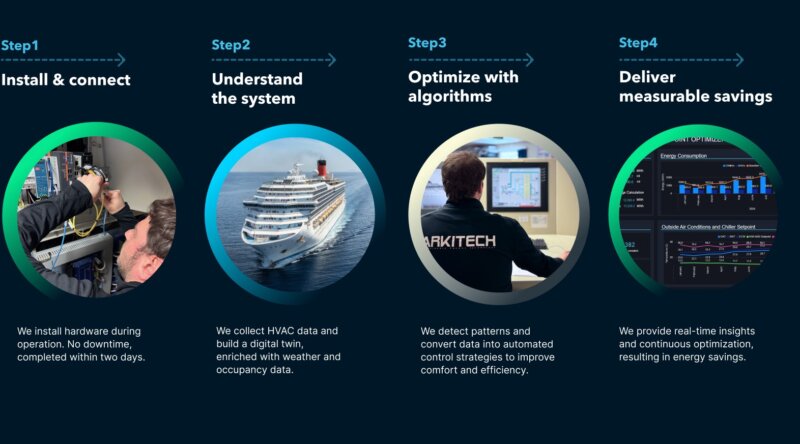
Arkitech’s HVAC optimization platform sits between your existing HVAC automation and the plant. It processes data from up to 1,500 onboard sensors in real time, autonomously adjusting chiller setpoints, fan speeds, pump flows, and sequencing strategies. Compatible with any HVAC system regardless of manufacturer, installed while the vessel stays in service.
Key benefits
Immediate fuel reduction
Validated savings of 1,500 to 2,000 MWh per year, translating to roughly 1 ton of fuel per vessel per day. No hardware modifications, no dry-docking, no disruption to operations.
Fleet-wide consistency
The same optimization logic scales across vessel classes and crew rotations. Performance is no longer dependent on who is on watch.
Full transparency for shore-based teams
Energy consumption broken down by subsystem, per vessel. The data to benchmark, justify, and track efficiency gains across the fleet.
Arkitech has allowed us to reduce HVAC energy consumption by up to 10% on the vessels where it is deployed, without affecting passenger comfort or operational reliability. For us, the value is twofold: immediate fuel savings and a tool that helps us and our onboard teams manage HVAC performance more consistently across the fleet.
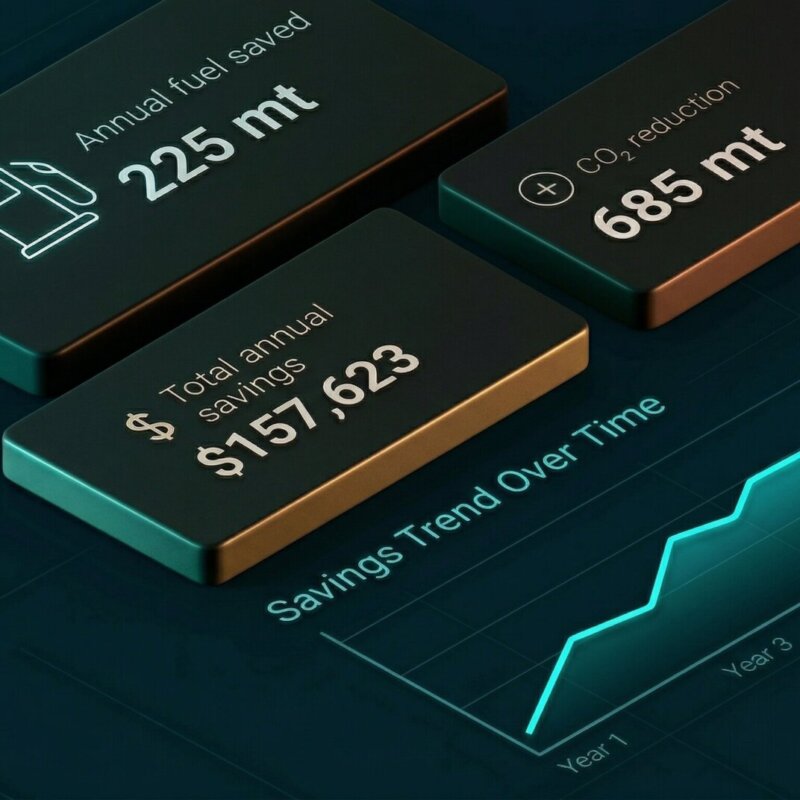
Estimate your vessel’s annual fuel, cost, and CO₂ savings in under two minutes.
Platform capabilities
Works with any existing HVAC system
Our platform works in seamless cooperation with existing OT infrastructure, acting as a high-precision digital co-pilot. We ensure a predictable and stable environment that extends the operational lifespan of onboard hardware while maintaining full safety integrity.
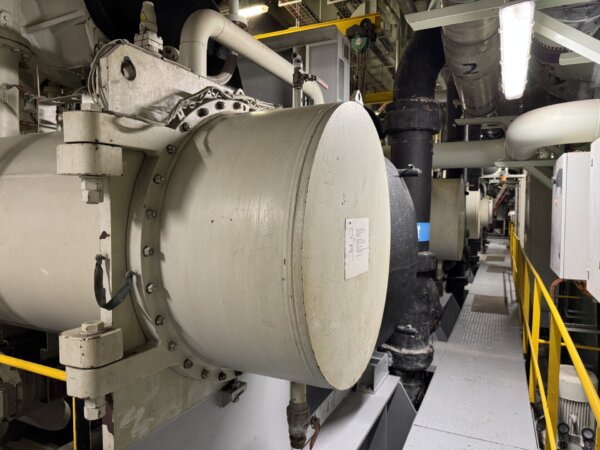
Runs on the ship. Stays secure.
Arkitech runs its platform directly on the ship, ensuring operational data stays on the vessel and the system keeps running, even if the satellite connection fails or the internet goes down completely. Traffic is secured to IACS standards with certificate-based authentication, aligned with UR E27 requirements.
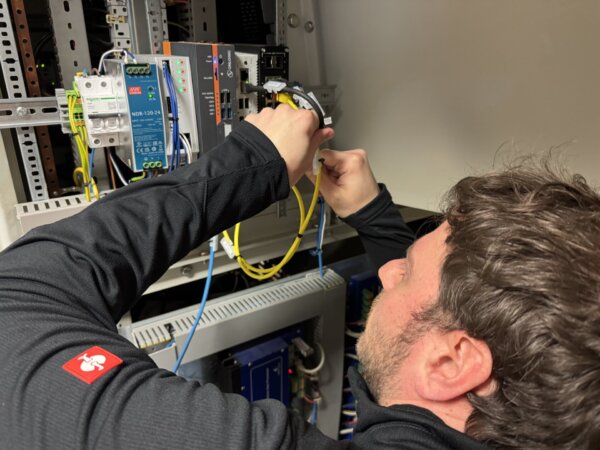
Real-time monitoring
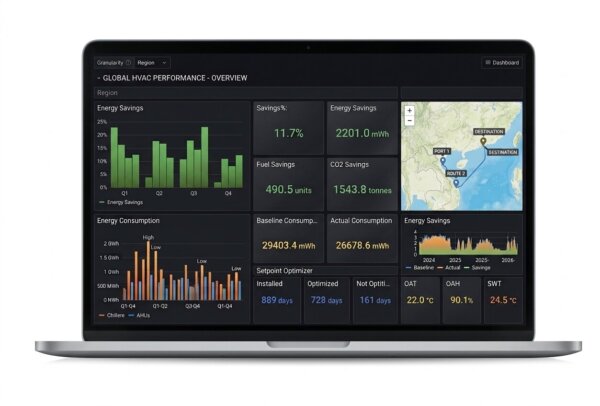
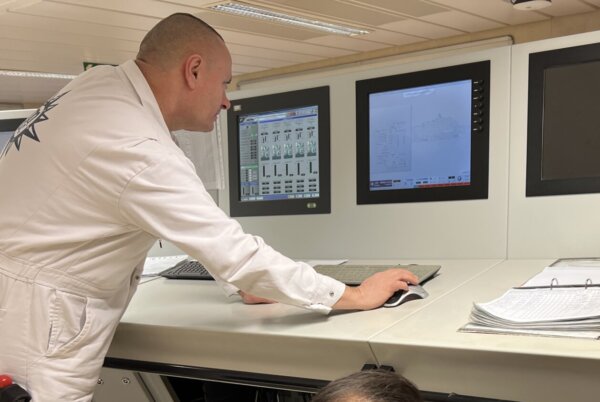
Dashboards show live HVAC performance per subsystem: chillers, AHUs, and pumps. Monthly energy reports provide the detail for fleet-wide benchmarking. Operators see exactly where energy is going and where the gains are coming from.
Consistent performance across crew rotations
When crews rotate, optimization knowledge leaves with them. The platform preserves effective configurations in software, giving incoming engineers an immediate baseline to work from. Onboard teams keep full control and gain real-time feedback on the impact of their decisions, making HVAC management more targeted and more rewarding.
FAQ
-
The system monitors temperature, humidity, and CO₂ levels continuously. Comfort parameters are maintained as hard constraints; optimization only happens within that envelope. Deployments across multiple vessel classes show no impact on passenger comfort scores.
-
The full process from initial quickscan to operational optimization typically takes 2 to 3 months. The quickscan itself is a half-day on-vessel assessment. Installation happens while the vessel stays in service, and the system begins generating savings as soon as it goes live.
-
Energy consumption is metered at the subsystem level: chillers, AHUs, and pumps. Savings are calculated against a vessel-specific baseline that accounts for variables like weather, route, and occupancy. Calculation methodologies are undergoing independent audits by DNV and Bureau Veritas.
How deployment works

Do you have any questions? Let’s talk.
Whether you’re exploring HVAC optimization for the first time or evaluating it for a specific vessel, I’m happy to walk you through what we see in practice and what it could mean for your fleet.
Sander Huijer, CEO